Understanding College Refund Checks: What They Are and How They Work for College Students

Last updated June 25, 2026

Starting college means learning to manage new financial responsibilities that may be completely new to you. One of the most exciting yet confusing topics for students is financial aid refund checks. If you’ve heard of students getting “extra money” from financial aid after tuition is paid, they might be talking about refund checks! We’ll walk you through what refund checks are, how they work, and how to make the most of yours if you receive one. 

Important update on financial aid and refund checks

Recent news reports suggest that the U.S. Department of Education may reduce the amount of Pell Grant funding available to students in future academic years. If these changes are applied, they could impact how much financial aid students receive overall. This may also affect the size of financial aid refund checks or whether students receive one at all. Because Pell Grants are a major source of aid for many students, even small changes can have a significant impact on college affordability. Keep in mind that policies like this can change, so it’s important to stay informed by checking official updates from StudentAid.gov or trusted news sources. You can also contact your school’s financial aid office to understand how any potential changes may affect your specific situation.

What is a refund check?

A refund check is money that your school gives back to you if there is a surplus after your financial aid has been applied to your account. This can happen when the total amount of your grants, loans, or scholarships exceeds the cost of tuition, fees, and on-campus housing (if applicable). If there is money left after your financial aid has been applied to your student billing account, then that amount is known as a credit balance. Colleges are required to refund you any credit balances on your student billing account via direct deposit, check, or credit towards future tuition and fees with your permission within 14 days

How do I know if I’m getting a refund check?

Students will know if they are receiving a financial aid refund check after all of their tuition and fees have been covered for the term and there are remaining funds. Here is the general cycle of financial aid that may lead to a student receiving a refund check from their college: 

  1. Complete or renew your FAFSAComplete or renew your FAFSA application. 
  2. Check your status – Log in to studentaid.gov and click “My Activity”. If any corrections are needed, be sure to take action.
  3. Wait for your offer – Your college(s) will craft a financial aid offer letter based on your FAFSA. Call your school’s financial aid office if you have concerns.
  4. Review your offer(s) – Review financial aid offer letter(s) with your family or a trusted educator.
  5. Accept aid – Follow the steps outlined in your offer letter to accept the grants, scholarships, loans, and/or work-study you want for the upcoming school year.
  6. Disbursal of aid – Your school’s financial aid office will apply your aid directly to your student account.
  7. Pay off remaining balance – If there’s any unpaid tuition and fees remaining, you’ll be responsible for covering it.

OR 

  1. Receive a refund – If there is money left after covering tuition and fees, you’ll get a refund to use for other college expenses, like books, supplies, and transportation. If this comes from a loan, you can reduce the amount you accept. 

When are refund checks disbursed?

It varies by college, but it’s usually right before the start of the term after the add/drop deadline. Most colleges will post the refund disbursal schedule directly on their billing or financial aid website. 

What can I use my refund check for?

It’s best to use a financial aid refund on education-related expenses. This can include rent, books, supplies, transportation costs, and food. It may be tempting to use the money on personal, non-school related expenses, but it’s important to use these funds wisely. While checks may feel like “free money,” it’s important to understand that if the funds come from a loan, you will have to pay them back with interest, so be sure to only accept what you need. 

What are things to keep in mind about refund checks?

While it’s exciting to be receiving money, it’s important to consider the implications. 

  • Budget your money: Make a budget to get the most out of your refund check! It’s easy to spend quickly, but keep in mind that refunds usually only come at the start of the term. If you don’t have a job, you’ll want to stretch that money to last the whole term. 
  • Only take out loans that are necessary: Refunds are often the result of taking out more money in student loans than you actually may need. If your refund feels like too much, you can return the extra money to your student loan provider. It may feel like free money now, but it’s money you’ll eventually need to pay back later. Contact your school’s financial aid office for details about returning funds. 

Financial aid refund checks should be used to support your experience as a student while teaching you to effectively manage your money! If you have any questions or concerns, connect with a Get Schooled Advisor.

Keep going

How to Write a Professional Email in College

Last updated June 30, 2026

In this article

Whether you’re applying for a job, communicating with educators, or exploring careers, knowing how to write professional emails is essential. In this article, we show you how to write a professional email with a few real-life examples!

Applying for a Job

While many companies use specific hiring platforms for candidates to submit job applications, some may accept applications over email. When applying for a job over email, you will need a few items to make a strong first impression:

  • Your resume. Every job you apply forwill require you to submit a resume. Your resume should include things like your work and volunteer experience, academic history, and skills or achievements. Before applying, submit your resume to us for free review and feedback!
  • Your cover letter. While not every job you apply for will require you to submit a cover letter, we recommend that you write one anyway. You can draft a basic cover letter and tailor it to each position you apply for. Regardless of the position you’re applying for, it’s important to make sure that your cover letter clearly explains your interest in the position and the experiences (work, volunteer, etc.) that make you the best candidate for it. Both your resume and cover letter should be attached to the email you send for the hiring manager’s review.
  • Your professional email. Because you’re attaching your resume and cover letter, your email to the hiring manager can be brief. In your email, you will want to introduce yourself, briefly explain your interest in the position, and direct the hiring manager toward your resume and cover letter for review. 

Sample Email

Subject: Interest in [name of position] at [name of company]

Dear [hiring manager’s name],

My name is ____, and I am a senior at ____. I recently came across the [name of position] opening at [name of company], and I wanted to express my strong interest in this opportunity.

As a self-motivated individual with experience as a [insert job or volunteer experience here], I believe I have the skills and passion necessary to thrive in this role. 

I am eager to learn more about the [name of position] role and how I can contribute to the team at [name of company]. I would appreciate the opportunity to discuss how my background and interests align with the needs of your company.

Attached below are my resume and cover letter for your review. Thank you very much for your time and consideration. 

Best regards,
[your name]
[your phone number]
[your email address]

Emailing Educators 

Whether you need extra support from your high school teacher or have a question for your academic advisor in college, it’s important to communicate clearly, effectively, and professionally with your educators. Read more below to learn how to communicate respectfully with an educator.

Sample Email

Subject: Request to Meet About [name of subject, topic, etc.]

Dear [educator’s name],

I hope you’re doing well. My name is ____, and I’m a ___ student in your ____ class. I’m writing to ask if we could meet soon to discuss [name of subject, topic, etc.]. 

I’m happy to meet during your office hours or whenever is best for you. Please let me know if we can arrange a time.

Thank you for your time, and I look forward to speaking with you.

Best regards,
[your name]
[your phone number]
[your email address]

Requesting an Informational Interview

If you come across someone on LinkedIn or through your network, you can reach out to them to request an informational interview. Informational interviews are one of the best ways to learn more about the career pathway you’re interested in, directly from a person working in it. Read more below about requesting an informational interview. 

Sample Email

Subject: Request for an Informational Interview

Dear [professional’s name],

My name is ____, and I am a student at ____. I am very interested in learning more about [specific field or industry], and I [came across your LinkedIn profile, was put in touch with you by ____, etc.]. 

Given your experience and success in [specific field or industry], I would appreciate the opportunity to conduct an informational interview with you to learn more about your career journey and any advice you may have for people interested in pursuing a similar path. I would love to meet for a 15-20 minute conversation over the phone or on a video call at a time that is most convenient for you. 

Thank you very much for your consideration. I look forward to the possibility of speaking with you and learning from your experiences!

Best regards,
[your name]
[your phone number]
[your email address]

Do you have any questions about writing professional emails? Connect with a Get Schooled Advisor.

Keep going

Five Tips for College Students to Practice Financial Self-Care

Last updated September 15, 2025

In this article

For many people, talking about or navigating finances can cause anxiety. However, taking the initiative to learn more about money management and how to wisely save and spend can help you practice financial self-care and reduce some of that anxiety. Here are five tips for practicing financial self-care.

Set clear and realistic financial goals

It’s important to have clear financial goals for the future. Whether they’re immediate goals, like saving $15 per week by making coffee at home, or long-term goals, like paying $50 extra per month on your student loans, having something clear and realistic that you want to achieve is key. We recommend setting a small monthly goal first to give you the momentum to tackle a bigger goal the next month!

Be intentional with your money

Knowing when and how to be intentional with your money can prevent you from overspending. We recommend doing three things before buying something you may not need:

  1. Sleep on it! If you give yourself time to think about it more, you may realize you don’t actually want or need it.
  2. Play “Would I rather?” For example: “Would I rather buy this pair of jeans now or save the money for a new phone instead?” This can help you prioritize your long-term goals.
  3. Consider how much use you’ll get out of the item. Can it be used more than once? Is it practical? Does it bring you joy?

If you’re still undecided, try using the value-based spending formula. When you want to buy something, take the cost of that item and divide it by your hourly pay (if you have a job). For example, if your pay is $15 per hour, a $30 pair of jeans is 2 hours of work. Doing this will help you consider how much you actually want or need that item. 

Set aside money for emergencies

Having a “rainy day” fund, or money purposely set aside for emergencies, can lessen your financial burden if something unexpected happens. If you need to get your car fixed or go to the dentist, you can pull from your emergency fund without throwing your budget off. We recommend setting aside 5-10% of your monthly income to go into this fund, whether it’s putting cash in a separate envelope or opening a second checking account. If your employer pays you through direct deposit, ask if you can split your deposit into two accounts (checking and savings), that way a portion of your paycheck can be deposited into your savings account without even thinking about it. It may not seem like a lot at first, but it could make a big difference in the future!

Budget for expenses that make you happy

Financial self-care doesn’t have to be all about saving! Treating yourself to something every once in a while is a great way to stay motivated. Set aside some fun money each month to spend on something that makes you happy, such as clothes or going out with friends. Use our budgeting guide to learn how to break down your monthly expenses and calculate how much money you could put towards guilt-free spending (we recommend 10% of your monthly income).

Creating a budget for the first time? Check out our budgeting tips here! 

Talk to people about money

When you talk about money with others, you lessen the stigma that surrounds it. Talking about money sounds uncomfortable, but it doesn’t have to be! There’s no shame in confiding in the people you trust about your financial situation and goals. Try partnering with a friend or family member to be your budget buddy. You can both make budgets and compare progress at the end of each month. Having someone to hold you accountable can offer you encouragement to keep going, and make you more likely to achieve your goals!

Do you have any questions about practicing financial self-care? Connect with a Get Schooled Advisor.

Keep going

Ways to Cope Through Academic Struggles in College

Last updated June 30, 2026

In this article

Struggling academically in college can be a frustrating and challenging experience, but it’s important to remember that it doesn’t define you as a person. Whether you’re dealing with burnout, a learning disability, a difficult subject, or a lack of motivation, there are strategies and resources you can use to move forward toward academic success.

A young black man sits at his desk with a computer in front of him and holds an open book - Ways to Cope Through Academic Struggles

(Lee este artículo en español aquí!)

Take care of yourself

Taking care of both your mental and physical needs can help your body be better positioned to process stressful situations. Here are some things you can do to take good care of your health:

  1. Drink plenty of water and avoid sugary drinks to stay hydrated.
  2. Incorporate more fruits and vegetables into your diet.
  3. Try to limit processed foods and fast food.
  4. Get the recommend 8 or more hours of sleep each night to allow your body to rest and recover.
  5. Engage in physical activity for at least 30 minutes (or walk 10,000 steps) each day.
  6. Stay connected with friends, family, or a support system.
  7. Don’t hesitate to talk to someone if you’re feeling overwhelmed.
  8. Create a daily routine to stay organized and reduce stress.

Find time for rest, recovery, and joy

Taking time to engage in hobbies or activities that you enjoy and connecting with family and friends who support you are also ways to help you feel a bit more grounded, especially during times when you feel challenged. Mindfulness activities can help when you’re feeling stressed or burnt out. Try some of these practices to help build and maintain resilience:

  1. Practice meditation or deep breathing exercises daily to calm your mind and reduce stress.
  2. Pay attention to your thoughts and feelings without judgment. Acknowledge them, but don’t dwell on them.
  3. Stay present in the moment by focusing on your senses. Take in the sights, sounds, smells, and sensations around you.
  4. Engage in activities that bring you joy and help you stay present, such as listening to music, going for a walk, or practicing a hobby.
  5. Schedule time for joy. It might feel silly, but we schedule time for work, school and other responsibilities. Schedule time or block off time in your calendar that you will use for something that brings you joy!

Manage stress

Everyone handles stress differently, so it’s important to identify healthy coping mechanisms that work for you. Some people find relaxation techniques like deep breathing or yoga helpful, while others prefer to listen to music or journal their thoughts and feelings. Here are a few stress management tips that could help you when academic pressures are high:

  1. Identify the sources of your stress and develop strategies to address them.
  2. Take breaks throughout the day to engage in relaxing activities, such as reading a book or taking a walk.
  3. Use positive self-talk to encourage and motivate yourself.
  4. Develop a support network of family and friends you can talk to when you’re feeling stressed or overwhelmed.
  5. Break the work into small approachable tasks rather than trying to tackle everything at once.

Never be afraid to ask for help!

It’s important to recognize when it’s time to reach out for help. If you’re struggling academically, don’t be afraid to talk to your professors or academic advisor about your concerns, or seek out tutoring or academic coaching services. If you have a learning disability or face other academic challenges, don’t hesitate to request accommodations that can help you succeed.

It can also be helpful to understand what kind of learner you are. Everyone learns differently, so it’s important to identify your preferred learning style. Some people are visual learners, while others prefer hands-on or auditory learning. Once you know your learning style, you can tailor your study habits and strategies to fit your needs.

Watch out for burnout

When you’re feeling overwhelmed, it can be easy to push yourself too hard and end up burning out, or not having the time, energy, or motivation to take care of important tasks. Make sure you’re taking regular breaks throughout the day and prioritizing the self-care activities that are important to you.

Remember, academic struggles don’t define your worth or your future. With the right support and strategies, you can overcome challenges and achieve your goals! Do you have any questions? Connect with a Get Schooled Advisor.

Keep going

Study Tips: How to Study Effectively in College

Last updated June 30, 2026

In this article

No matter the class or subject, having good study skills is essential to succeeding academically. There’s no “right” way to study, but there are some helpful habits and tips that you can incorporate into study methods that already work for you. Here are some of our tips and strategies to study effectively!

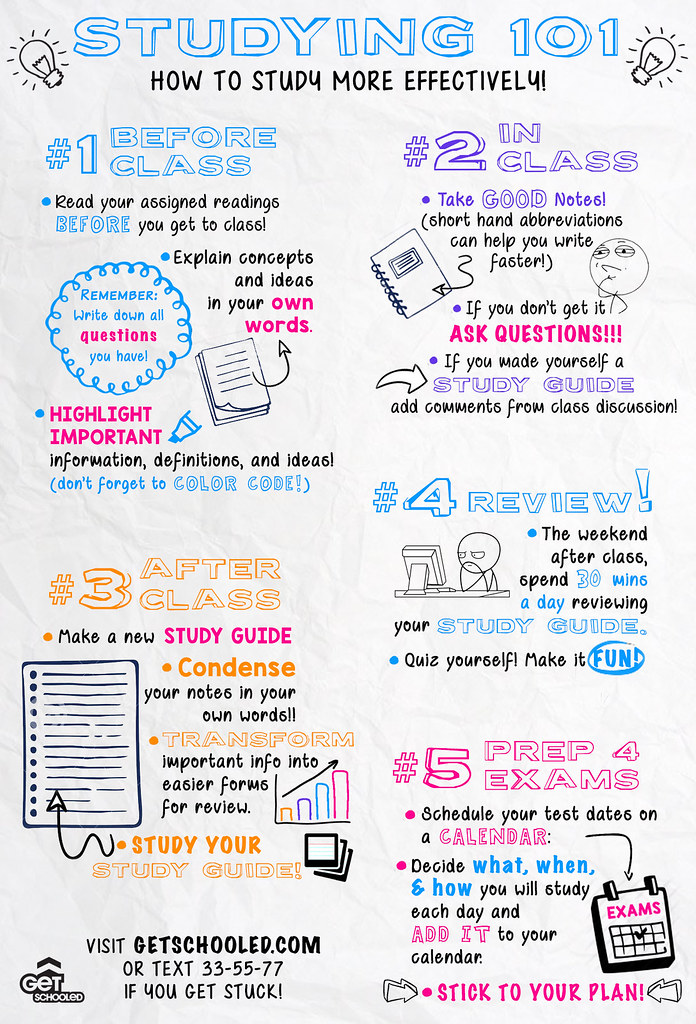
Before class

Read all of your assigned readings before going to class. When you finish your readings, try explaining the concepts and ideas in your own words by writing down notes or talking about them with a classmate. Note any questions about concepts you don’t fully understand, and ask your professor or teacher during class or office hours if you’re in college!

In class

While you’re in class, be sure to take notes. If your professor or teacher prepares slides ahead of time, download them so you can take notes as they review them and go over new material. If they do provide slides, you don’t need to copy the text on them word for word. Instead, pay close attention to the additional context being presented on the topic. If you don’t understand something, be sure to ask questions.

After class

Once you’ve gotten through class, make a study guide or review your notes. Condense your notes into your own words to make sure you grasp important concepts. Make sure you note any new knowledge you are still unclear of so that you can follow up with your teacher or professor. 

Review

Spend some time reviewing your notes and study guide. This will help make sure that you are grasping the course materials and retaining information. Cramming might work in a pinch, but won’t help you learn in the long run. This is especially important if it’s information from the beginning of the term that you’ll need to remember for the final. 

Prep for exams

Schedule test dates on your calendar. Take a few minutes to decide what, when, and how you will study each day leading up to the exam. This will help you make sure you have enough time to prepare and cover all relevant materials before the exam. Try your best to stick to your plan, but leave room to make adjustments if needed.

Screenshot or save the image below to have handy when you need some study inspiration!

Infographic of study tips | how to study effectively

Do you have any questions? Connect with a Get Schooled Advisor.

Keep going

How to Prepare for a Big College Exam

Last updated June 30, 2026

In this article

Preparing for a big college exam? While test-taking can be a source of anxiety for some students, you will be on track to succeed with some time and preparation. In this article, we share tips to help you prepare for a big exam!

A Black man wearing a flannel sits at a table and types on his computer - How to Prepare for a Big Exam

Determine what you know and what you don’t know

Efficiency is key when preparing for an exam. Try to prioritize studying topics or concepts you don’t feel as confident in. After you’ve spent a good portion of your time covering these areas and feel confident enough to move on, spend some time reviewing the material you already know. 

Figure out what your study style is

Are you the type of learner that likes making flash cards? Or do you like studying in a group? Think about what is the best way for you to study and stick to that! Some students like studying alone so they don’t get distracted, while some students like studying with a partner so they can ask each other questions. Figuring out what your study style is can be a huge help for you as you plan for the big exam. 

Make a study guide

Creating a study guide to organize class material can help you prepare for an exam. Don’t be afraid to try a new way to study. Some students like to rewrite or reorganize their notes, others like to make flashcards, and some write out paragraphs and highlight key terms in different colors. Learn more about effective ways to format your study guide!

Talk to your teacher or professor 

Some teachers and/or professors will host office hours or time after school where you can ask for help. Don’t be afraid to ask your teacher/professor for help directly. If they offer office hours or a time when you can meet with them, plan to do that. They can clarify confusing topics, suggest what to focus on, or even share practice problems to guide your studying. Reaching out early also shows initiative, which can make class discussions and future assignments feel much more manageable.

Create a study schedule and find a good place to focus

Start studying at least 2-3 weeks ahead of a big exam. Try to dedicate 30 minutes to one hour, at least three times per week, to studying. You may also want to create an ideal study space, so whether you prefer to study in a cafe or at home, make sure you take the necessary steps that allow you to study distraction-free.

Studying for a big exam can be intimidating, but with the right preparation, you will be on your way to success! Do you have any questions about preparing for an exam? Connect with a Get Schooled Advisor.

Keep going

How to Plan for a Productive Day as a College Student

Last updated June 30, 2026

In this article

Keeping track of your academic, personal, and professional responsibilities requires time management skills, and the best time to build them is now. We’ll show you how to plan for a productive day!

Use a planning tool

Using planning tools like journals or apps can help you keep track of your daily, weekly, or monthly schedule. Write down all of your obligations in a given time frame, like school, work, extracurriculars, or plans with friends to understand what you have going on. Whatever medium helps you keep track of everything is great, as long as you will be consistent with using it!

Review your schedule the night before

At the end of each day, review the day you’ve had by checking off what you accomplished. Ask yourself, what is in progress and what do you need to start? This will help you prioritize tasks the next day with everything fresh on your mind.

Establish a morning routine

What do you need to do in the morning to have a good day? It could be having breakfast, doing your hair, making your bed, or listening to music. Whatever it is, try to do this every morning to get yourself in the mindset to tackle your responsibilities of the day. Building smaller habits like this can make it easier over time to build bigger and more consistent habits! 

A woman works on her laptop and takes notes on paper - How to Plan for a Productive Day

Block out time for breaks and eating

In the midst of everything you have going on, block out time on your schedule to move, stretch, eat, and rest. Taking care of yourself and getting good rest can lead to better productivity in other areas of your life! 

Identify and limit distractions

If you find yourself being distracted by things like your phone or social media, set some firm boundaries for yourself. Doing things like reducing your social media usage to only 5 minutes per hour or putting your phone on do not disturb can help you better focus and take care of your responsibilities.

Do you have any questions or want to learn more about making the most of your days? Connect with a Get Schooled Advisor.

Keep going

How to Focus When Studying at Home in College

Last updated June 30, 2026

In this article

Whether your phone, social media, or the noise of your roommates is distracting you while studying at home, it’s important to stay focused. Here are a few of our best tips to focus on studying at home!

A pair of white headphones sits on top of a stack of papers next to a Mac computer - How to Focus When Studying at Home

Set up a study space

Dedicate an area at home where you can study without interruptions. Let everyone in your home know that when you are in this dedicated area, they shouldn’t disturb you. Having an area you can associate with studying and school work will help you focus. 

Use headphones

Try listening to music or white noise to turn a busy place into a zen space! Headphones can help block out noise and signal to others that you are busy. Create a study playlist with your favorite songs, add white noise tracks, or classical pieces. No headphones? Play music or white noise in the background from a computer, radio, or TV.

Turn off your phone or place it 5 feet away from you

The best way to avoid the temptation of checking your notifications is to turn your phone off when studying. If you need to leave it on, place the phone 5 feet away from you. Having to walk to your phone will add another layer of effort before you can check it. This extra action may be enough to deter the habit of checking your phone when you should be studying!

Study with friends

Set up a video call to study with friends. For this to work, you all have to agree to block out a set time of studying before socializing. By uniting around a common goal, you can get your respective assignments and studying done together.

Try the Pomodoro technique

The Pomodoro technique can help you focus on a task by using timed sessions and a timed break in between each one. Here’s how it works: 

  1. Choose a task to work on.
  2. Set a timer for 25 minutes.
  3. Work on the task until the timer ends. On a piece of paper, give yourself a checkmark.
  4. Take a short 5 minute break.
  5. After 4 Pomodoro sessions (checkmarks), take a longer break (15-30 minutes).

Do you have any questions about studying at home? Connect with a Get Schooled Advisor.

Keep going

How to Eliminate Distractions & Focus on Studying in College

Last updated June 30, 2026

In this article

No matter what’s distracting you, test out a few of our tips to help you eliminate distractions and focus on studying!

Can’t focus at home? 

Try changing your scenery and studying at a library or coffee shop. If you prefer to study with company, invite your friends or classmates to join you! 

Use headphones

Distracted by noise at home or at your favorite study spot? Put in headphones and listen to some white noise to zone in on your studying. 

Turn off your phone

Phones can be one of the biggest distractions when studying! The best way to avoid constantly looking at your phone is to turn it off (or put it in airplane mode or do not disturb) for an hour or two at a time to focus on getting your studying done.

Try the Pomodoro technique

The Pomodoro technique can help you focus on a task by using timed sessions and a timed break in between each one. Here’s how it works: 

  1. Choose a task to work on.
  2. Set a timer for 25 minutes.
  3. Work on the task until the timer ends. On a piece of paper, give yourself a checkmark.
  4. Take a 5-minute break.
  5. After 4 Pomodoro sessions (checkmarks), take a longer break (15-30 minutes).

Do you have any questions about studying? Connect with a Get Schooled Advisor.

Keep going

How to Answer Multiple Choice Questions on College Exams

Last updated June 30, 2026

In this article

Whether you’re preparing for a quiz or are studying for a final exam, you will encounter tests that have multiple choice questions. In this article, we’ll share tips on how to answer multiple choice questions with confidence!

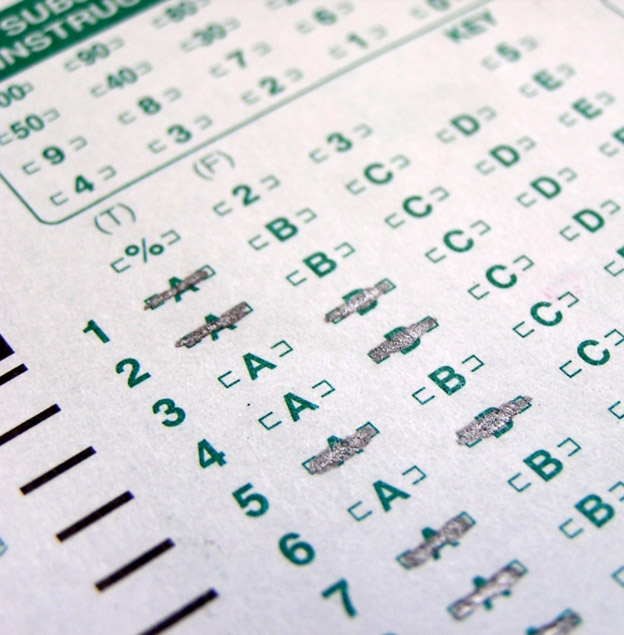
Green scantron with answers bubbled in - How to Answer Multiple Choice Questions

Read the entire question

Read a multiple choice question all the way through before looking at the answer options. While this may seem like common sense, it’s helpful to remember when you’re under a time crunch or are sure you know the answer despite not having read the entire question. 

Answer it in your mind first

After reading a question, answer it in your mind before reviewing the answer options. This will help prevent you from talking yourself out of the correct answer. 

Use the process of elimination

Cross out all the answers you know are incorrect, then focus on the remaining answers. Not only does this strategy save time, it increases your likelihood of selecting the correct answer.

Use the true or false test

If you’re unsure of the answer options for a question, give each one a true or false test. Cross out the false answers first before identifying the correct answer. 

Look for answers hidden in questions

Sometimes, answers are hidden right in the question! This is another reason it’s important to read the question thoroughly before answering it. 

Answer the questions you know first

If you get stuck on a question, move on to the next one. Answer all the questions you’re confident about first before going back to the ones you’re unsure of. This can save you time and some pressure!

Know when to avoid selecting “All of the above” or “None of the above”

When you encounter an “All of the above” answer choice, do not select it if you are pretty sure that one or more of the other answer choices provided is incorrect. The same applies for “None of the above” if you are confident that at least one of the answer choices is correct.

Keep an eye on the clock

While it’s important to do your best to answer questions correctly, it’s just as important to make sure you answer all of them within your allotted time. Before your next multiple choice exam, practice your time management skills to make sure you’re ready to go.

Do you have any questions about preparing for your next exam? Connect with a Get Schooled Advisor.

Keep going