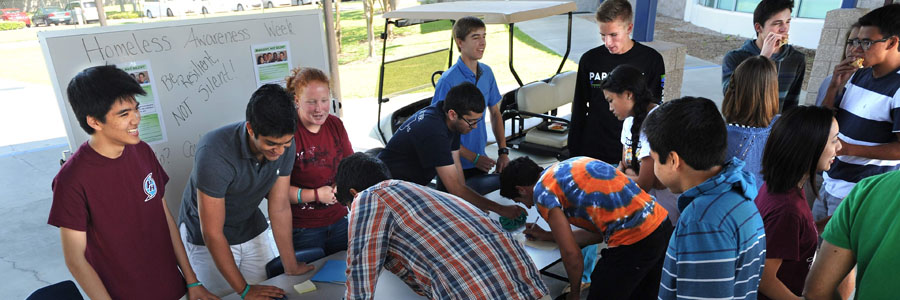
There are many accessible ways to volunteer in your community that can easily to fit into your schedule! Depending on your interests, you can give back to your community while gaining valuable experience that’s great both on your resume and college applications! We share some accessible ways to volunteer for students.
Start your search on a volunteering website
Websites like VolunteerMatch can connect you to great volunteer opportunities in your community. Using this website, you can filter opportunities by location, skills required, time commitments, and more. There are usually both remote and in-person opportunities available through this site.
Follow and engage with social media accounts
Follow nonprofits and organizations with missions and values that align with yours. Take the time to like, share, and leave supportive comments to nudge the algorithms to display the nonprofit’s social media account more widely. More visibility on social media can lead to more impact and engagement for the organization! If you feel up to it, you can even DM an organization to ask about volunteer opportunities they may have in-person or remotely.
Host or organize a donation drive
Have your friends and family gather things they don’t need or use anymore (that are still in good condition) to donate to a local charity, church, or nonprofit. Places like food banks, animal shelters, and homeless shelters are usually always in need of crucial resources. To learn each organization’s specific needs, call them or check out their websites. Once you do some research, you can start collecting donations.
Help your neighbors
Know a neighbor that might need some help with their yard, cleaning, getting groceries, or completing other important tasks? Reach out to them and ask if you can help. Sometimes giving back can start with those closest to you!
While juggling your high school sport with your classes can sometimes feel overwhelming, it can also make you a better student. In this article, we’ll share some ways that your high school sport can make you a better student!
Time management
On top of managing your academic responsibilities, you’re also juggling the responsibilities of your sport. You can take the lessons you’ve learned from your sport and apply them to your academics! For example, you may have dedicated practice time with your team three times a week for two hours at a time. During this time, you focus only on practice. You can do the same with your academics by setting aside regular focused time to work only on homework or studying. By intentionally blocking out this time, you’re much more likely to focus.
Teamwork
As the saying goes, there is no “I” in “team.” Because you collaborate with others regularly in your sport, you may find it much easier to be a team player in the classroom, thoughtfully contributing to group projects or study sessions.
Communication skills
Since most sports are collaborative, they require open communication. You communicate frequently with your teammates about plays, strategies, and tactics. As a student athlete, you’ll find it easier to communicate in school, especially with your classmates and teachers. Need some more time to complete your portion of a group project? Not understanding a class concept that will be on an upcoming test? You can communicate these things openly and honestly to receive the support you need.
Giving and receiving feedback
Improving in your sport requires determination and an openness to receiving feedback. If your coach or teammate corrects your form or technique, they’re doing so because they care about your improvement! The same can be said in the classroom. If a teacher gives you feedback about your performance on an exam or assignment, it’s because they care and want you to succeed. As you progress through your sport, you may find it easier to receive and use feedback into all areas of your life. Additionally, you may find it easier to give constructive feedback, too!
Confidence
In addition to taking the time to practice and improve your skills as an athlete, you also need to be confident in yourself and your teammates! The same goes for your academics. Even if you take time to prepare for an exam or assignment, it’s important to have confidence in yourself as a student to succeed. Once you’ve built up confidence in your sport and in school, you may also find it easier to ask for and receive help when needed.
College and jobs
In addition to making you a better student, experience playing sports can also go a long way on college applications and on your resume! Colleges and employers appreciate applicants who can demonstrate that they are engaged outside of their academics and can collaborate well with others. Be sure to add your experience with your sport to your resume and on your college applications!
There are many benefits to participating in extracurricular activities in high school. Not only can these activities teach you something new and help you build valuable skills, they can also lead you to make friends and feel a sense of community. Additionally, extracurricular activities are a great way to boost your college applications!
Academics are important, but they aren’t everything, especially when applying to college. Admissions staff look for students that are well-rounded and have a good balance of academic and extracurricular experience and achievements. They are curious to know what students are passionate about outside of the classroom and how those passions could make a good fit at the school they’re applying to.
With this in mind, it’s worth mentioning that you don’t have to overextend yourself or participate in a ton of extracurriculars just to get accepted to college. There are many extracurriculars to choose from, and by taking some time to brainstorm and reflect on your interests and passions, you can find an activity that you’re excited to participate in!
10 Extracurricular Activities to Boost Your College Application
Join a club
Participating in clubs shows colleges that you have interests and passions outside of the classroom and enjoy community building. Whether your club volunteers on the weekends or plays Minecraft together, it’s all valuable experience that can make a great addition to your college applications. If your school doesn’t have a club you’re interested in, consider starting one with your friends!
Learn one of 45 languages for free on Duolingo
Knowing a second language can benefit you personally, socially, and professionally. Sign up for a free Duolingo account, choose a language that interests you, and start studying!
Learn a new skill
There are many sites out there dedicated to helping people learn new skills and build on existing ones for free! Sites like Coursera, Codecademy, and Khan Academy are just a few of the many places you can explore new skills to add to your college applications. Many will even provide you with a certificate of completion once you’ve finished.
Volunteer for an organization or cause that you care about
Giving back to your community is a great way to support those around you and show a college admissions team that you value using your free time for good and can balance school and extracurricular responsibilities. Choose a cause that you care about, like local politics, tutoring, or city clean up, and begin volunteering!
Create a story, poem, or work of art and submit it for publication
Getting exposure for your talents not only elevates your craft, but also enhances your appeal to colleges. Submitting your latest writing piece to a local publication or advocating to have your art showcased in a community exhibit are great ways to stand out in the college application process. This shows that you value and believe in your own skills and can advocate for yourself, which are two skills that are crucial to have in college!
Play a sport
Participating in sports as a high schooler can instill valuable skills like teamwork, communication, and time management – all of which can make a great addition to your college application!
Find an internship
Exploring career paths that interest you in high school can help you better decide where and why you want to apply to college. If you find something that interests you, try getting an internship in that field. Not only will it help you determine whether that path is the right fit for you, it can help you make valuable connections and stand out to potential colleges by signaling to them that you’re someone who plans for the future.
Tutor friends, classmates, or neighborhood kids in a subject you’re confident in
Whether you speak Arabic, love geometry, or have a passion for writing, you likely have skills that can be used to help someone in your community. If you’re confident in a specific subject, why not tutor your peers or people in your neighborhood? Tutoring experience can signal to colleges not only that you have knowledge in core academic subjects, but that you’re passionate about sharing this knowledge with others.
Audition for a play at your school or local theater
Even if you’re not going to a fine arts or drama school, sharing your love for theater shows another element of your personality that may not be reflected through your academics or other extracurricular activities. Experience in local theater can also help you develop your public speaking skills, leading you to be more confident in class presentations, job interviews, and networking situations.
Get a job
Having a job is a responsibility that requires skills like punctuality, dependability, and customer service – all of which you can add to your resume, cover letters, and college applications. If you currently have a part-time or seasonal job, you’re already participating in a valuable extracurricular activity!
Don’t see your activity on the list? It still counts!
Even if an activity you participate in isn’t listed here, it can still be a valuable addition to your college application. What matters most is how you describe your involvement and what you’ve learned from it. Whether it’s helping out with family responsibilities, creating content online about a subject you are passionate about, or pursuing a personal hobby, these experiences can demonstrate important skills like leadership, creativity, and time management. When writing about your activities, focus on your impact, growth, and commitment. Colleges want to understand who you are and what you care about, not just check off a list of activities.
Joining a club is an easy way to meet people who share your interests. What better way to spark a new friendship than to talk about something you both know and enjoy?
Strengthen your college applications
When applying to college, it’s important to share different parts of your personality and interests to give admissions committees a more complete picture of who you are and what makes you unique! Colleges want to know what interests students outside of the classroom. Experience in extracurriculars like clubs can share a side of you that your test scores and GPA can’t!
Develop skills
Clubs can help you develop personal and professional skills that last a lifetime. No matter what type of club you’re in, you can learn something new. For example, experience in a robotics club can teach you math skills and the value of working hard toward a goal. Experience in a dance club can teach you communication and collaboration. The skills you’ll learn can be valuable in your personal life and your future career!
Network
When you make a new academic, personal, or professional connection with someone, they become a part of your network. Down the road, when you’re looking for new professional opportunities, your network can help! For example, if you bond with a club member over your love of coding, you can stay in touch with them, and in the future, if they come across a coding job or internship that they think you’d be good at, they can send it to you. You can also do the same for your network. You never know who you’ll meet or what opportunities come up!
Build your resume
Whether you’re applying to college or for jobs, having a strong student resume is important. Your resume is a place to list all of your academic, professional, and extracurricular experiences, like experience in a club! This helps schools and employers get to know a bit more about you and what interests you outside of the classroom.
Being involved with clubs in high school is an awesome opportunity to explore your passions, connect with others who have similar interests, and have fun! Interested in joining a high school club but not finding one that interests you? Start your own! Check out these 50 unique high school club ideas to start at your school.
There are many great reasons for students to volunteer! Volunteering allows you to give back to others, earn required community service hours for school, gain experience in certain fields to add to your resume, and make new professional connections. Here are five online volunteer opportunities for students that can be done from the comfort of your home!
Become a Smithsonian Digital Volunteer
Since 2013, virtual “volunpeers” have been reviewing and transcribing documents for the Smithsonian Institution’s digital library, making historical documents more accessible for all. Documents include field notes, diaries, ledgers, logbooks, photo albums, biodiversity specimen labels, historic audio recordings, and so much more.
Join an online citizen science project at Zooniverse
Millions of registered volunteers are participating in real science research through Zooniverse. Research projects cover a huge range of topics, from history and medicine to art and nature.
Be a digital advocate for American Red Cross
Digital advocates for the American Red Cross share important information on social media to raise awareness about causes they believe in. Additionally, the Red Cross makes it easy to start your own online fundraiser in support of those who need it!
Become a TED Translator
If you speak more than one language and are looking for a way to give back, you can join TED Talks’ network of 47,000+ volunteers to translate TED Talks from home!
Tutor students online
Apply to be a virtual tutor with Learn to Be! They have volunteer opportunities for high schoolers, college students, retirees and working professionals. You can create a volunteer schedule that works for you.
Looking for more ways to give back?
Check out VolunteerMatch, a free platform that connects you to volunteer opportunities and nonprofit organizations based on your skills, interests, and location. If you’re looking for other extracurriculars you can do from home or virtually, check out our list of 10 activities to boost your college application!