
Where to Find Internships

Last updated February 19, 2026

In this article

If you’re looking for a way to gain work experience for your resume or college applications, why not consider an internship? Internships offer valuable hands-on work experience in a variety of professions and fields to help people learn and grow their professional network. From online job boards to school resources, discover where high school and college students can find internships to build skills and explore careers. 

Handshake

Screenshot of Handshake homepage - Where to Find Internships

Handshake is a popular platform that helps college students find internships and other early-career opportunities. What sets Handshake apart is its ability to connect students directly with employers—you can receive messages from companies, apply to internships, and network with alumni from your school who work at organizations you’re interested in. Because Handshake is a gated platform designed specifically for college students, you must register using a college email address to access opportunities.

Idealist
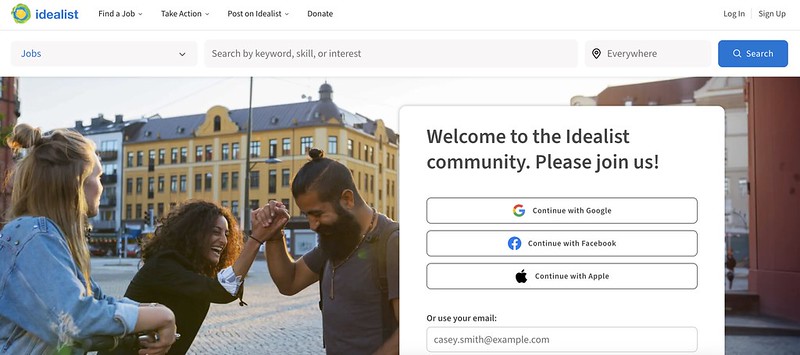
Screenshot of Idealist homepage - Where to Find Internships

Idealist is a website where students can find jobs, internships, and volunteer opportunities, especially with nonprofits and organizations focused on helping others. You don’t need to create an account to browse opportunities, but making a free profile allows you to save positions you’re interested in. To get started, enter your city and explore internships and volunteer opportunities near you.

StandOutSearch

Screenshot of StandOut Search homepage - Where to Find Internships

StandOutSearch is an internship platform created specifically for high school students. It allows you to explore internship opportunities using filters like grade level, interests, paid or unpaid positions, season, and more. No sign up is required to start searching.

WayUp

Screenshot of WayUp homepage - Where to Find Internships

WayUp is a job and internship platform for college students and recent graduates to search for opportunities, access career advice, and connect directly with employers. WayUp is a gated platform, so you must register and complete a profile before viewing opportunities. Once your profile is complete, you will have access to a dashboard of internship opportunities that match your profile.

Indeed

Screenshot of Indeed homepage - Where to Find Internships

Indeed is a popular job and internship search website used by students and professionals. You can search for internships by job title, company, or location and filter results by part-time, full-time, or temporary roles. No account is required to browse, but creating a free profile allows you to upload your resume and apply more easily.

LinkedIn

Screenshot of LinkedIn homepage - Where to Find Internships

LinkedIn is a professional networking platform that also helps students find internships and jobs. Students can search for opportunities, follow companies they’re interested in, and connect with professionals and alumni. Creating a profile allows you to showcase your skills, experience, and interests while building your professional network.

Federal Internship Finder

Screenshot of Federal Internship Finder homepage - Where to Find Internships

Federal Internship Finder connects students to internship opportunities within the U.S. federal government. It pulls together internships from multiple government agencies in one place, making it easier to explore public service careers. Opportunities are available for high school, college, and graduate students.

USAJobs.gov

Screenshot of USAJobs.gov homepage - Where to Find Internships

USAJobs.gov is the official website for jobs and internships with the U.S. federal government. Students can search for paid internships, summer programs, and entry-level positions across a wide range of fields. Creating an account allows you to apply for positions and track your applications online.

Your school’s career center

If you’re a college student, use the resources offered by your campus career center. In addition to helping you fine-tune your resume and prepare for interviews, many college career centers have great online job and internship boards where students can search for opportunities based on their major or areas of interest. Additionally, career centers have relationships with employers and often are aware of internship opportunities that may be exclusively available to students at your school.

Apply directly on a company’s website

Another way to find internships is by applying directly through a company’s website. Many organizations post internship opportunities on their “Careers” or “Jobs” pages, often with detailed descriptions of the role and internship requirements. Applying directly allows you to target companies you’re genuinely interested in and can sometimes give you access to opportunities that aren’t posted on job boards.

Through your network

Your network is a great place to start your search! Reach out to old coworkers, supervisors, and managers to let them know you’re interested in finding an internship. They may know of an opportunity that could be a great fit for you! You can also tap into your academic connections in college. For example, if you are looking for an internship in media or journalism, you can reach out to your school’s student newspaper advisor to see if they have any helpful connections. Once you are connected with someone who works in your desired industry, you can set up an informational interview to learn more about their profession and any opportunities they may be aware of.

Do you have any questions about finding an internship? Connect with a Get Schooled Advisor.

Keep going

How to Make The Most of Your Internship

Last updated January 6, 2026

In this article

Landed an internship and want to make a lasting impression while learning and growing your professional skills? We share five ways to make the most of your internship!

Two men dressed in black look at a computer screen - How to Make The Most of Your Internship

Create new relationships

Internships provide a great opportunity to grow your network and meet new people! Your professional relationships typically make up your network—the people you know in a professional capacity who can potentially help you find your next job opportunity. Introduce yourself to your new coworkers, join workplace social events, and learn about the work being done where you’re interning. Don’t be afraid to ask people who have a career path you’re interested in to have lunch or coffee with you during your time as an intern!

Set personal and professional goals

Your internship is a great time to work on specific skills or explore a potential career path, but to do them efficiently, you need to set goals! Make sure you’re clear about each thing you want to accomplish, being as detailed as possible. For example, if you want to enhance your public speaking skills because you know it will be necessary for your chosen career path, work with your internship supervisor to see if there are projects that will allow you to give presentations.

Take initiative

Your internship could sometimes be challenging, busy, or jam-packed with responsibilities. Other times, however, you may find yourself with fewer items on your to-do list. Don’t wait to be told what to do! This is the perfect time to take initiative and ask for new assignments or tasks. Going above and beyond shows your supervisor that you’re driven and can work independently–qualities that increase the likelihood of getting an invite back, securing a strong reference for future opportunities, or even being offered a permanent position!

Find a mentor

A mentor can help you grow your professional skills both during and after your internship. Mentors can give you advice, be a reference for future job opportunities, and help you make important connections throughout your career. If you build a positive relationship with a coworker or supervisor at your internship, consider asking them if they would be open to mentoring you!

Keep a journal of the experience

Take time during your internship to write out not only what you did each day, but the exciting moments, the way successes (and missteps) made you feel, and questions you have about the experience overall. Keeping this type of log may be required by your school (if you’re in college) or the organization you’re interning for, so be sure to check and see what information you should be collecting throughout your time as an intern. Lastly, if you’re thinking about trying out a new job or preparing for an interview, you can reread your journal and reflect on your experience and think of examples to use in an interview or cover letter!

Looking to land an internship to put these tips into action? Here are places you can start your search! Do you have any questions about internships? Connect with a Get Schooled Advisor.

Keep going

How to Build an Internship Search Plan

Last updated March 5, 2026

In this article

If you’re ready to get real-world experience and explore career options, building an internship search plan is a smart first step. Internships offer more than a short-term experience. They can help you figure out what kind of work you enjoy, build practical skills, and create a network of professionals who can support your career goals. Having a clear plan will help you stay focused, land the right opportunity, and take your next steps with confidence. In this article, we’ll show you how to build an internship plan! 

Start by deciding what kind of internship you want

Before you start your search, spend some time thinking about the types of opportunities you want to pursue. Take into consideration your strengths, interests, and long-term goals. An internship can be a perfect opportunity to explore a new field or find an opportunity in your desired career path to determine if it’s what you want to pursue. In general, internships are designed to be learning experiences that help you gain insight into specific industries. 

Consider the following when searching for opportunities: 

  • Size – Consider the size of the company you want to work for. How will the size impact your experience?
  • Pay – We always encourage students to seek paid opportunities first. Are you willing to take an unpaid internship if the opportunity is intriguing or the right fit? 
  • Location – Where do you want to intern? Do you want to look for opportunities that are local, remote, or in a specific city/region?
  • Mission – Does the mission of the organization resonate with you? Can you picture yourself representing their mission through your work? 
  • Culture – What is the makeup of the team? Will there be other interns going through the experience with you? Will the work you do be collaborative, independent, or structured?
  • Diversity & Inclusion – Does the organization have a commitment to equity and representation? 
  • Benefits – Aside from pay, are there other benefits like paid time off, flexible hours, or professional development? 

Regardless of the type of opportunity you’re looking for, it’s important to take some time to consider what’s going to be the best fit for you, your schedule, and your obligations.

Prepare your application materials 

Resumes and cover letters are often the first way employers get to know you, so you’ll want to make sure they represent who you are. Both should be reviewed ahead of time and free of any errors when you submit. Your resume should incorporate all of the relevant information that demonstrates that you have the experience, education, and skills to succeed and grow in your internship role.

While not every job you apply for will require you to submit a cover letter, doing so anyways can help you stand out from other candidates. An effective cover letter should explain your interest in the position you’re applying for and highlight the skills and experience that make you the best candidate. We recommend drafting a basic cover letter template that highlights your experience and skills and tailoring it to each position you apply for

Depending on how many opportunities you are pursuing, it’s a good idea to keep track of your applications throughout the internship search process. Use our free Internship Search Tracker to get started! You can keep track of the internships you applied for, application statuses, important contacts, required application materials, and any other relevant information.

Focus on internships that align with your goals. Use internship boards, LinkedIn, your college’s career center, and company websites to find opportunities that interest you. When you apply, make sure to tailor your resume and cover letter to match the role. Hiring managers can tell when you’re genuinely interested!

Be sure to look for internship opportunities with plenty of time. Many internships, especially those held in the summer, begin recruiting and hiring months in advance. Handshake recommends that students prep their application materials about 4 months prior to applying or starting. This will allow plenty of time to ask for feedback from peers and mentors! 

Use your network to find opportunities

A solid internship search plan includes more than just online applications. Your network can be a powerful tool in helping you find the right fit. Start by talking to people you already know within your network, such as coworkers, professors, advisors, or supervisors who may be aware of internships you haven’t heard of. Friends, classmates, or family members might also have leads or tips based on their own work experience. Don’t hesitate to lean on your network to find new opportunities! 

Attending job fairs, workshops, or employer events can also be helpful. If you use LinkedIn, follow companies you’re interested in and connect with people who work there. A short message asking about their internship experiences or advice can go a long way! Most people are happy to help when you ask respectfully.

Stay persistent 

Applying for internships takes persistence and follow-through, and it’s easy to feel discouraged if you don’t hear back from employers. Keep at it! Every application you submit and interview you go through builds skills and experience. When you take time to build an internship search plan that reflects your interests and needs, you’re setting yourself up for success! 

Do you have any questions about building your internship search plan? Connect with a Get Schooled Advisor.

Keep going

How to Find Jobs & Internships in College

Last updated December 9, 2025

In this article

Many college students work part-time to help pay for tuition, class fees, and living expenses like groceries and rent. Whether you have previous work experience or are looking for a job or internship for the first time, there are plenty of opportunities out there! We’ll break down everything you need to know about jobs and internships in college – where to find them, what you need to apply, and how to prepare for and succeed in your interviews!

(Lee este artículo en español aquí!)

Benefits of having a job or internship

Having a job or internship in college can be very beneficial! These experiences can help you build and grow your professional network, which can potentially open doors to job and mentorship opportunities in the future. Additionally, depending on the type of job or internship you get, you can get a feel for career paths that interest you. For example, if you’re studying journalism and get an internship at a local newspaper, you can gain real-world exposure and hands-on experience in being a journalist, applying concepts you’re learning in your classes to your real life. This can deepen your understanding of what you’re learning and help you decide if this career path is a right fit for you. Lastly, balancing work with academics can teach you valuable life and career skills, like time management and work-life balance.

Before you apply

Being aware of your options and knowing what you’re looking for can help you narrow down your search.

Job or internship?

Unsure of whether to look for a job or internship? Here are some key differences between the two:

Pay: Jobs are paid opportunities. When you’re a part-time employee at a job, you’re typically paid an hourly wage. Internships, on the other hand, may or may not be paid. While many companies offer paid internships, you might come across some that don’t. An unpaid internship means that you would be doing free work for a company in return for job experience, networking, and mentoring.

Schedule: A part-time job can last indefinitely; once you accept the job, you can most likely work there as long as you want. An internship, on the other hand, can have a set time frame like a term or a year. There may be potential for renewal or extension, meaning you could stay longer than you’d originally planned, but it’s usually up to your company to decide.

Remember: School takes priority! Be sure that no matter what job or internship you accept, you are still able to focus on and succeed in your academics.

Do you qualify for work-study? 

Work-study is a federal program that offers part-time jobs to college students with financial need. Those who qualify for work-study typically work on-campus jobs, such as in the library or the student union building. Eligibility for work-study is determined by completing or renewing the FAFSA. If your college participates in the work-study program, and you meet their eligibility requirements, you’ll see “Work-Study” listed on your financial aid offer letter.

Note: Because work-study eligibility is determined by completing the FAFSA, undocumented students unfortunately do not qualify.

How will you get there?

This is an important consideration when searching for jobs! If you find an off-campus job or internship, how will you get there? Do you have a car or reliable public transportation to get there? Even if you find a great opportunity that aligns with your interests, if it’s not realistic to get there on a consistent basis, you may want to consider looking somewhere else.

Do you want the job or internship to align with your future career?

Do you want to focus only on jobs or internships that align with your future career, or are you focusing more on just finding a paid opportunity? Some college students work jobs that typically don’t relate to their desired career path, while others take internships to try out career paths they’re interested in before graduating. Both are great! The most important thing about taking a job or internship in college is that it’s providing you with valuable experience, is easy to get to, and works with your schedule. 

What you need to apply

Now that you’ve decided what kind of opportunity you want to apply for, it’s time to get your application materials together.

Resume

Most jobs or internships you’re applying for will require you to submit a resume. Your resume is your first impression on employers, so it’s essential to make sure it’s well-written, well-organized, and has relevant information about your work and extracurricular experience.

Need help building your resume? Create a job-ready resume in minutes with our AI-powered 

Resume Builder

tool! No matter your job experience, Resume Builder will create a personalized resume for you! After a guided conversation, your skills and activities will be turned into a draft resume—no blank page, no stress. Click the image below to begin!

Clickable button that advertises Get Schooled's Resume Builder tool - How to Find Jobs & Internships in College

Cover letter

While not every position you apply for will require you to submit a cover letter, doing so anyways can help you stand apart from other candidates. A cover letter should show your interest in the position and highlight the skills that make you the best candidate for it.

It’s important to note that you will need to write a different cover letter for each position you’re applying for. For example, a cover letter for a barista job likely won’t highlight the same skills that one for a lab assistant would. We recommend drafting a general cover letter that highlights your skills and abilities, and tailoring it to each position you apply for.

References

Professional references are people in your network who can speak positively about your skills, experience, and qualifications. When applying for either a job or internship, you most likely will be asked to list references on your application. When you make your way further through the interview process, they will call or email your references to learn more about you. If you list someone as your reference, be sure to give them a head’s up – it’s the respectful thing to do and lets them know to be prepared to be contacted.

Where to look 

Your college’s career center

At your college’s career center, you can find jobs to work as a student, learn about internship opportunities, and access several free job resources, such as resume and cover letter support, interview preparation, and more. We recommend starting your search here! Your career center may even have information about great opportunities that might not be listed online, or that prioritize applications from students at your school.

Your college’s job portal or board

Most colleges have an online portal for students to find jobs and internships, such as Handshake. When visiting your school’s career center, ask how to create an account for the portal, and begin searching for opportunities that interest you. 

Use your network

Your network can consist of anyone you’ve worked with in any capacity – bosses, coworkers, members of clubs you’ve been in, teammates, coaches, or educators. When you’re ready to start your job or internship search, be sure to check in with your network first. You never know what opportunities are out there!

How to prepare for interviews

Once you’ve sent in your applications and begin to hear back from employers, it’s time to learn how to rock your interviews.

Clickable button that leads to Get Schooled's Interview Coach tool - How to Find Jobs & Internships in College

Have any questions along the way about finding and applying for jobs and internships in college? Connect with a Get Schooled Advisor.

Keep going