Have a new job? We’ll help you understand how to read your paycheck!
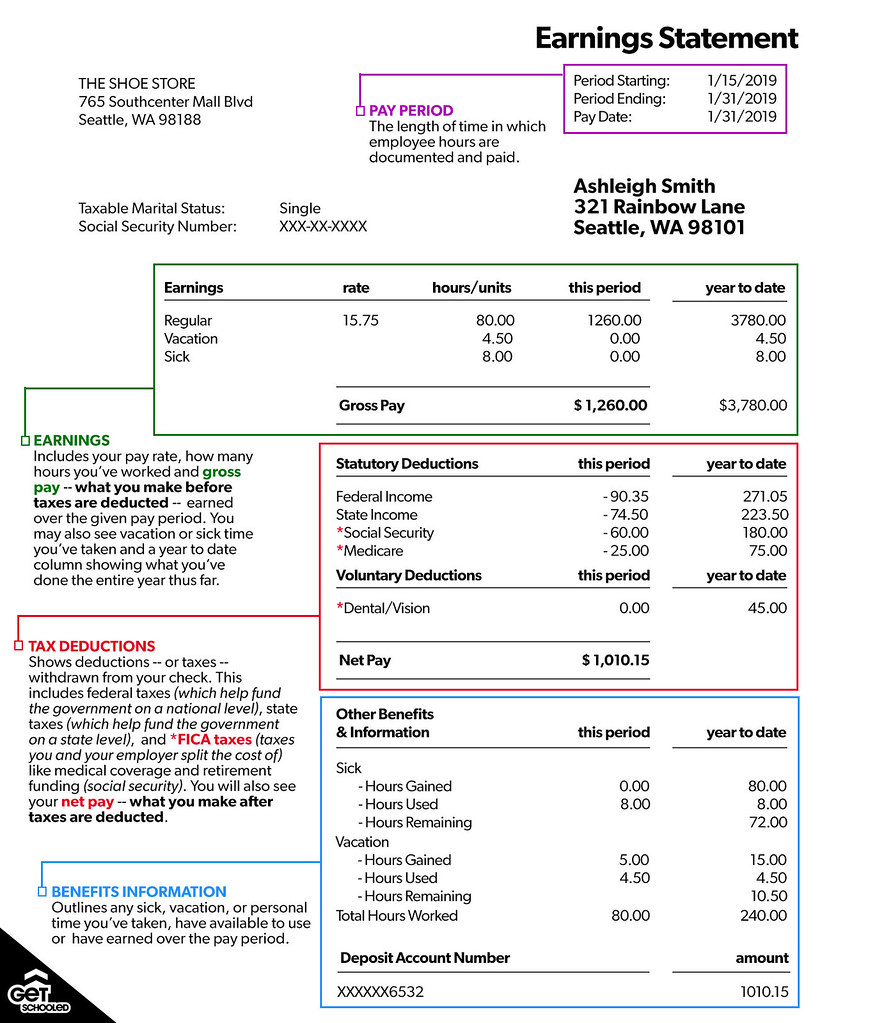
Most paychecks have two parts: your pay stub and paycheck. Your paycheck provides what is referred to as net pay, or the money that is paid to you. Your pay stub outlines your gross pay, or the money you made before taxes or any other deductions were taken from it.
It’s important to note that every pay stub will look different depending on the employer. If you have questions about yours, be sure to reach out to your HR or accounting department.
Key terms to know before reading your pay stub
Gross Pay: The total amount of money you earned before any taxes or deductions are taken out.
Net Pay: The amount of money you take home after taxes and deductions. This is your actual paycheck.
Tax Deductions: Money taken out of your paycheck for federal, state, and sometimes local taxes.
Other Deductions: These can include things like health insurance premiums, retirement contributions, or union dues.
Year-to-Date (YTD): This shows the total amount you’ve earned and the total deductions taken out from the beginning of the year up to the current pay period.
Pay Period: The time span for which you’re being paid (e.g., two weeks or one month).
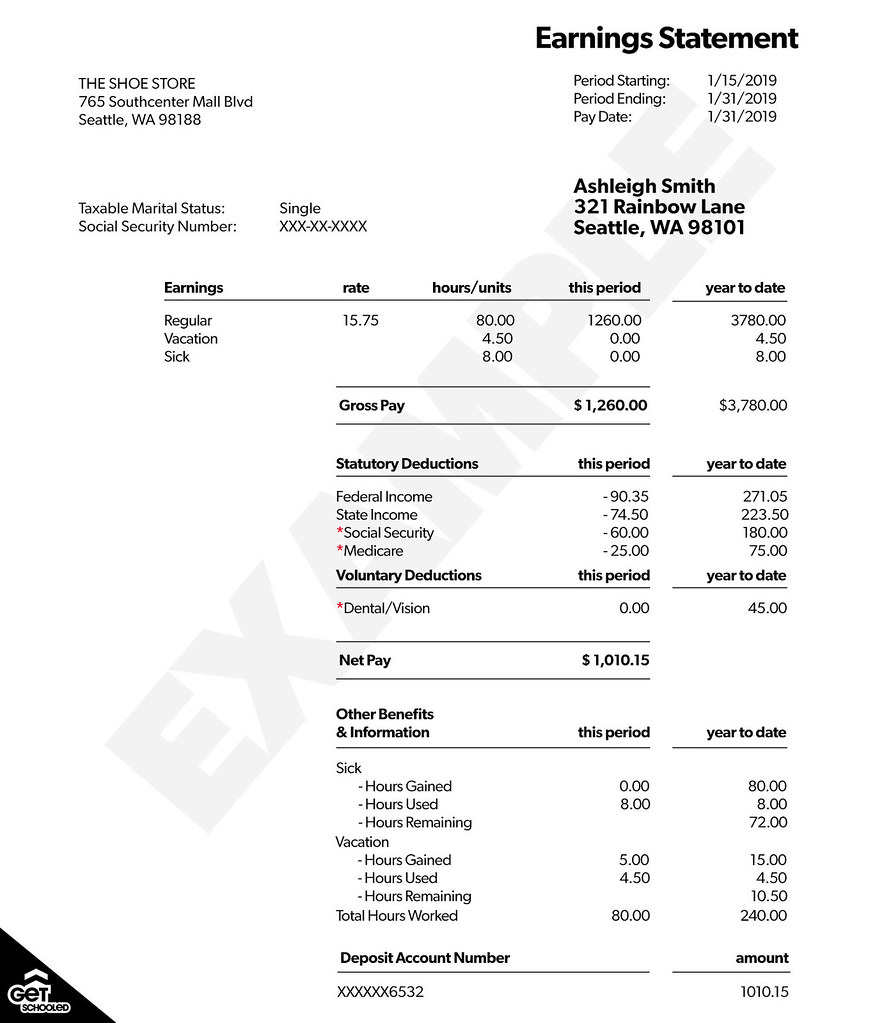
Here’s an outline of a typical pay stub and what you can expect to find on it:
Congratulations! You landed a job and now have a steady paycheck coming in. This is a great time to learn how to make your money work for you! Here are some key tips to manage your money from your first job.
Understand your paycheck and benefits
Be sure you know how to read your paycheck, how often you’ll be getting paid, and if there are any other benefits you might be getting from your employer. This can help you make sure that you’re clear on how much money you can expect in your pocket each month.
Create a budget
Getting your money organized is the first key to financial success and stability. There are many free apps that can help you budget in your first job. These will help you determine how much money you plan to spend versus how much you will be earning.
Pay yourself first
Whether you are signed up for direct deposit to your bank account or will be getting physical paychecks, be sure to think about your savings plan. “Pay yourself first” is a way of thinking about saving your money. Most of your money might need to be spent immediately on things you need, like your phone, food, or rent, but any money you save is like paying your future self! Set a realistic goal for saving each paycheck (even if it’s $20!) and stick to it. Be sure to open a savings account so that your money can grow.
Learn about the money moves teens and young adults should make
From learning about credit scores and applying for credit cards to opening your very first checking account, read about our money moves that teens and young adults should make now to set yourself up for financial success in the future. These tips will benefit you during your first job and every job you have going forward!
Want to build smart money habits early? Check out these seven essential financial moves for teens and young adults to boost your confidence and set yourself up for long-term success.
Whether you had a summer job or are working part-time in high school or college, it’s important to know how to file your taxes (or if you need to file them at all). We share what teens need to know about taxes and where they can find assistance in their community!
Tax season in the U.S. is from January to April, annually. The 2026 deadline to file, also known as “Tax Day,” was Wednesday, April 15. It can vary depending on holidays and if it falls on a weekend. Between January and April, most people who earned money in 2025 need to report it to the government by filing their taxes. Taxes are not only required by law, but they fund things like roads, healthcare, schools, airports, and other essential public services like police and fire stations.
If you earned less than the standard deduction for single filers which is $15,750 in wages in 2025, you did not need to file in 2026. If you made more than that, or if you made more than $400 in net earnings in a year as an “independent contractor” like a Lyft driver or Instacart shopper, you will need to file.
Understanding common tax forms
There are government-issued tax forms that every employer and employee in the U.S. who must pay taxes will use. Here is a quick breakdown of the most common ones:
W-2 – This is the form that any employer you had in the previous year will send you to show you the wages you earned and any taxes already taken from your paychecks that year. If you had multiple jobs in the previous year, you will receive a W-2 from each employer.
W-4 – This is a form that you will complete when you start a new job. It tells your employer how much to deduct from your paychecks for federal and state taxes.
W-9 – This is a form that you’ll only need to fill out if you are going to be an independent contractor. It is a way to let anyone you work for during the year show the government that they paid you as a contractor.
1099-NEC – This form is like a W-2 but for independent contractors. Anyone who paid you more than $600 during the year for contract work must send you this form. If you were paid by someone for contract work but made less than $600 in a year, they are not required to send you a 1099-NEC. However, you still must report this income.
Free resources for tax help
There are many free ways to get help tailored to your specific questions and needs! Here are some resources:
The Internal Revenue Service (IRS) – This is the official government department that will process your tax information. Check out their Free Tax Return Help tool.
United Way – This national nonprofit is located in many cities and counties around the country and is a leader in helping folks file their taxes for free. They offer individual help and often partner with bilingual organizations to support. Learn more about free tax help from United Way.
Public libraries – Most library systems around the country are a hub for free tax help. They may have experts helping in the library or have partner organizations they can refer you to. Some examples are in Seattle, New York City (which includes support for New Jersey and Connecticut), Detroit, Philadelphia, and Dallas.
Be cautious of tax scams, especially during tax season. The IRS may contact you by mail but they will never contact you by text message, social media, or direct message, and you should never share your Social Security number casually. Always use trusted, secure tax filing tools and reputable organizations when filing your taxes to protect your personal information.
Want to build smart money habits early? Check out these seven essential financial moves for teens and young adults to boost your confidence and set yourself up for long-term success.