Top 6 Reasons to Attend an HBCU

Last updated September 15, 2025

In this article

There are several great reasons to apply to a Historically Black College & University (HBCU). They’re competitive institutions with long histories of academic excellence, societal impact, and influential alumni – including former Vice President Kamala Harris! We share 6 reasons to attend an HBCU! 

Community

HBCUs are smaller institutions with close-knit communities. Most of them have fewer than 5,000 students, and their small class sizes make it easy to get to know your classmates and form meaningful relationships with your professors. Fewer students means faculty will know your name and are better able to help you achieve academic and professional success!

HBCUs are also known for their student life. Whether you join a student organization or just hang out with your peers after class, your time at an HBCU will create strong bonds that will last a lifetime. When you mix this family feel with school pride, you get a college community that has your back long after you graduate!

Academics

At HBCUs, the academics are distinguished. For example, Hampton University has the largest Proton Therapy facility in the world and Howard University has an internationally acclaimed theater program. HBCUs are also key in increasing diversity within the STEM field, as 25% of Black graduates with STEM degrees come from HBCUs, and Xavier and Howard University medical schools graduate 92% of the country’s Black doctors! While attending an HBCU, you’ll learn from some of the best scholars in the U.S.

Affordability

HBCUs are actively working to address the cost of college and recognize the effects of the generational wealth gap among Black students – especially those who are low-income or first-generation. On average, the cost of attending an HBCU is 28% less expensive than attending a predominantly white institution. HBCUs also offer scholarships to fill gaps that financial aid might not be able to cover. For example, Alabama A&M University, Fayetteville State University, and Alabama State University are some of the many HBCUs that offer scholarships or other financial aid assistance that eliminate or reduce out-of-state costs. In addition, scholarships sponsored by organizations like UNCF and Thurgood Marshall College Fund also offer partial and full scholarships for students attending HBCUs.

Cultural connection

Many Black students attend HBCUs to connect with their heritage, as they’re surrounded by people with similar cultural experiences. Students who attend HBCUs can experience a unique community of support and understanding with faculty and fellow students.

Homecoming

There’s NOTHING like a homecoming at an HBCU! These reunions bring out alumni from every living generation, and students get to meet them and learn about their college experiences. Imagine if a football game, carnival, club, comedy show, cookout, and five of the best concerts you can think of took place at the same exact time – that’s an HBCU homecoming!

Legacy

HBCUs have educated some of the Black community’s brightest minds and most influential leaders, including Dr. Martin Luther King Jr. (Morehouse College), Oprah (Tennessee State) and former Vice President Kamala Harris (Howard University). The personalized education and strong sense of community can help incoming students become part of the legacies of these schools and blaze their own trails in their industries!

Do you have any questions about attending an HBCU? Connect with a Get Schooled Advisor.

Keep going

14 Things To Expect As An HBCU Student

Last updated September 18, 2025

In this article

Curious about what it’s like to attend a Historically Black College & University (HBCU)? Here are 14 things to expect as an HBCU student!

You will see an abundance of Black excellence

At an HBCU, you will be surrounded with like-minded students striving to grow and reach professional and academic success. Your professors know where you are and what it takes to get you to where you want to be. Everywhere you turn there will be someone doing great things.

Networking will become second nature

An HBCU network is like having extended family. You will meet tons of successful professionals, alumni, professors, and students who can reach out a helping hand or pass along their knowledge. Be sure to take advantage!

School rivalries feel more like arguing with your cousins

HBCU students are all interconnected in some way – especially when it comes to friendly competition. Whether it’s sports, academia, or who has the most pride, no one will ever be able to challenge your HBCU in your presence. Your comebacks will be delivered with rapid-fire precision and you will more than likely gain friends from your rival HBCU because of how much fun you have going back and fourth with each other. Just know, at the end of the day it’s all love.

Just like the force, your school pride will always be with you

Your HBCU will become your second home and nothing will ever change that. It will have a significant role in influencing who you become.

Homecoming is a BIG deal

Most schools have a homecoming weekend, but at an HBCU, it will most likely be a full week of activities. There will be concerts, fashion shows, comedy nights, lyceum events, step shows, football games, tailgates, and much more! There is no other experience like an HBCU homecoming.

Black history will spill over into your other subjects

Whether you take a class devoted to the subject or not, you will most likely learn tidbits of Black history wherever you go on an HBCU campus. You will learn about all the ways Black people have shaped the world. It won’t matter if it’s math, biology, psychology or English class; Black history 365 is real.

Alumni have open-door policies

Most HBCUs have very notable and successful alumni who are eager to give back and pass the torch. 

Random pep rallies and turn-ups around campus are the norm

It’s not uncommon to be walking back to your dorm and notice, out of nowhere; a full-blown party has formed in the middle of the yard. There will be students gathering, Greeks stepping, and a DJ blasting music in broad daylight. Don’t ask questions, just go!

You will end up devoting half of your life to some kind of organization

It’s very difficult to avoid being involved with something on an HBCU campus. You will most likely join a sorority or fraternity, band, student government, or one of the many other student organizations on campus. And you will love every minute of it.

The cafeteria is really a runway in disguise

At HBCUs, the cafeteria is prime stomping ground for all things fashion. At some point you will wonder how an entire fashion show popped up in the line for chicken Wednesday. It happens to the best of us.

No games are played when it comes to the band

Halftime will never be the same. HBCU bands are notorious for showing up and showing out! Joining one is like being adopted by a second family.

You will most likely see celebs drop in on campus

Celebrities love HBCUs. Whether they come for an event, a lecture, to teach, for homecoming, to endorse a cause, or to just show love as alumni, you will bump into someone famous on your campus!

You will be exposed to diversity in all aspects

Contrary to popular belief, HBCUs are extremely diverse. You will be exposed to professors and fellow classmates that come from all religions, sexual orientations, races, backgrounds, cultures, and economic levels.

Your glow up will be strong

Growth is inevitable. You will find out more about yourself than you’ve ever discovered before. You will be challenged culturally, intellectually, politically, and professionally. Don’t be afraid. Dive in and be great!

Do you have any questions about HBCUs? Connect with a Get Schooled Advisor.

Keep going

Everything You Need to Know about Women’s Colleges

Last updated September 16, 2025

In this article

Women’s colleges have a rich history of producing leaders, pushing forward the movement for women’s equality, high graduation and job placement rates, and strong academic programs. If you’re looking for a tight-knit college community focused on empowerment, equality, and professional and academic achievement, add women’s colleges to your college list. Here’s what you should know about women’s colleges!

History of women’s colleges

Throughout the 19th century, higher education was not readily available to women. Although some institutions allowed women to attend, their education was often not comparable to the education offered to men, as the curriculum offered to women focused on more “appropriate” subjects, such as home economics.

Today, women make up more than half of all college students in the U.S. Many colleges that were originally created for women are now coed, but there are around 30 schools remaining that still cater to the needs of women and non-binary students in the U.S. 

Reasons to consider attending a women’s college

There are several great reasons to add women’s colleges to your list. Here are just a few!

Small class sizes and personalized academic programs

The majority of women’s colleges in the U.S. each have a total student population of under 3,000 students. If you’re interested in small class sizes, individualized attention from professors, opportunities for independent study, and an emphasis on community building, attending a women’s college may be right for you.

Higher graduation rates

Women’s colleges have notably higher graduation rates than public colleges, especially for Black, Latinx, non-resident, and Pell Grant recipient students. Historically Black women’s colleges, like Spelman, have one of the highest graduation rates in the country at 76%!

Wondering if a women’s college might be a good fit for you?

Use BigFuture’s College Search tool to research women’s colleges by major, degree type, online or in-person classes, and location.

Are you interested in attending a women’s college or learning more about your options? Connect with a Get Schooled Advisor.

Keep going

What to Know About Tribal Colleges & Universities

Last updated September 15, 2025

In this article

When considering where to attend college, it’s important to have options that make you feel like you can be yourself while having your traditions and perspectives valued. For Native American students, Tribal Colleges and Universities (TCUs) can do exactly that. We share what you should know about TCUs in the U.S.

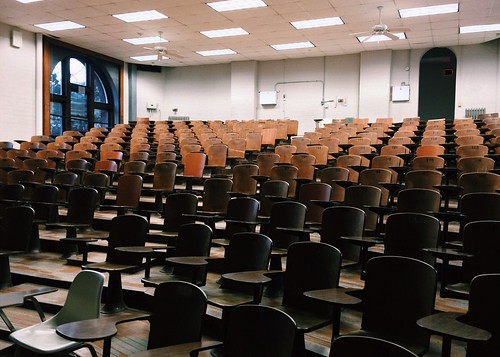
Empty college lecture hall - What to Know About Tribal Colleges & Universities

What is a Tribal College and/or University?

Tribal Colleges and Universities (TCUs) are schools either on or near federal Indian reservations. There are currently 37 accredited TCUs across the country. While many TCUs are two-year colleges where students can receive an associate degee, other’s have bachelor’s, master’s, and certificate programs.

Why were TCUs established? Why are they important?

TCUs were created specifically for Native students, who had traditionally been pushed out of or excluded altogether from higher education. The first TCU, established in 1968, was Diné College on the Navajo Nation in Arizona.

TCUs are essential not only to Native students, but to all of higher education in the U.S. While they provide high-quality college educations to students of all races and ethnicities, TCUs are important because they specifically create space to practice and honor Native American traditions, languages, and history—things that were historically suppressed or eliminated in higher education. TCUs intentionally make space for Native students who want to receive a degree, enrich their knowledge about their culture, and meet other students who share some of their experiences and values.

Frequently asked questions about TCUs

Can I attend a TCU if I’m not Native?

Yes! TCUs receive federal funding, so they’re open to all applicants, regardless of race or tribal affiliation.

How does financial aid work at a TCU?

The first step to receiving financial aid at any college or university, including TCUs, is to complete the FAFSA. All forms of financial aid, including scholarships, grants, and loans, are only awarded to students who have filed their FAFSA.

Organizations offering scholarships to Native students will most likely require applicants to prove that they’re a member of a federally recognized tribe and/or submit a Certificate Degree of Indian Blood (CDIB) for consideration. 

Where can I find scholarships for Native students?

Some organizations offer scholarships specifically for Native American and Alaska Native college students, like the American Indian College Fund, the Association on American Indian Affairs, and Catching the Dream.

Can Native students attend college for free?

More and more schools across the country have begun to make tuition free for Native students. For example, Northern Arizona University and University of Arizona offer free tuition to students who are enrolled members of one of Arizona’s 22 federally recognized tribes. Additionally, The University of California system began offering in-state tuition and mandatory fee waivers in fall 2022 for Native students who are California residents and enrolled in a federally recognized tribe.

Do you have any questions about attending a Tribal College or University? Connect with a Get Schooled Advisor.

Keep going