Last updated August 6, 2026
In this article
- Why career exploration should start with you
- Four questions worth answering first
- Turn your answers into something you can search
- Test what you find in the real world
- Expect your answers to change
- Start with one question today
Most career advice starts in the wrong place. It hands you a list of high-paying jobs, or a quiz that spits out “forensic accountant,” and waits for you to react.
But a career isn’t something you get assigned. It’s something you build out of what you’re good at, what you care about, and what your life realistically needs to look like. All three are about you, which means you’re the first thing to research!
This article is the starting point to walk you through taking an honest inventory of yourself, and then turning that into careers you can actually look up, ask about, and try.
Why career exploration should start with you
It’s tempting to skip this part. Reflecting on yourself feels slower than scrolling a list of careers, and less productive.
It isn’t. Here’s what starting with yourself gets you:
It cuts a huge field down fast. There are thousands of jobs out there and you can probably name thirty. Knowing that you need to be around people, or that you’d rather be judged on results than on hours, eliminates entire categories in one move.
It gives you language. Once you can say “I want work where I solve problems for people face to face,” you can search better, ask better questions, and write a much stronger resume and cover letter. Employers respond to candidates who know what they’re looking for.
It makes you harder to talk out of things. When you understand why a path fits you, other people’s opinions about it carry less weight, including the well-meaning ones.
Skipping straight to job listings means making a big decision with no information about the most important variable in it.
Four questions worth answering first
You don’t need a personality test. You need honest answers to four questions.
Write them down. This matters more than it sounds like it does; you literally use a different part of your brain when you write things down.
1. What am I actually good at?
Not “what’s my best subject.” What do people come to you for? What do you pick up faster than the people around you? What part of a group project do you end up owning because you’re the one who can do it?
Count the things that don’t look academic. Calming down an upset customer, keeping a group organized, fixing something without instructions, explaining a concept until it finally clicks for someone, those are real skills that employers pay for.
2. What holds my attention?
What do you lose track of time doing? What do you read about, watch, or argue about when nobody assigned it?
An interest isn’t a career plan by itself. But it’s a strong signal, because it tells you what you’ll still care about on an ordinary Wednesday three years in.
3. What matters to me?
This is the values question, and it’s the one people skip. Do you need to feel like your work helps someone? Do you want recognition, or do you want to be left alone to do the work? Right now, is stability worth more to you than excitement, or the other way around?
Practical things belong on this list too. Wanting to earn enough to support your family holds real value, not misplaced priorities.
4. What does my life need to look like?
Schedule, location, how much training you can afford, how long you’re willing to be in school, whether you’re able to move. These are constraints, and naming them isn’t giving up on anything, it’s how you build a plan that survives contact with your actual life.
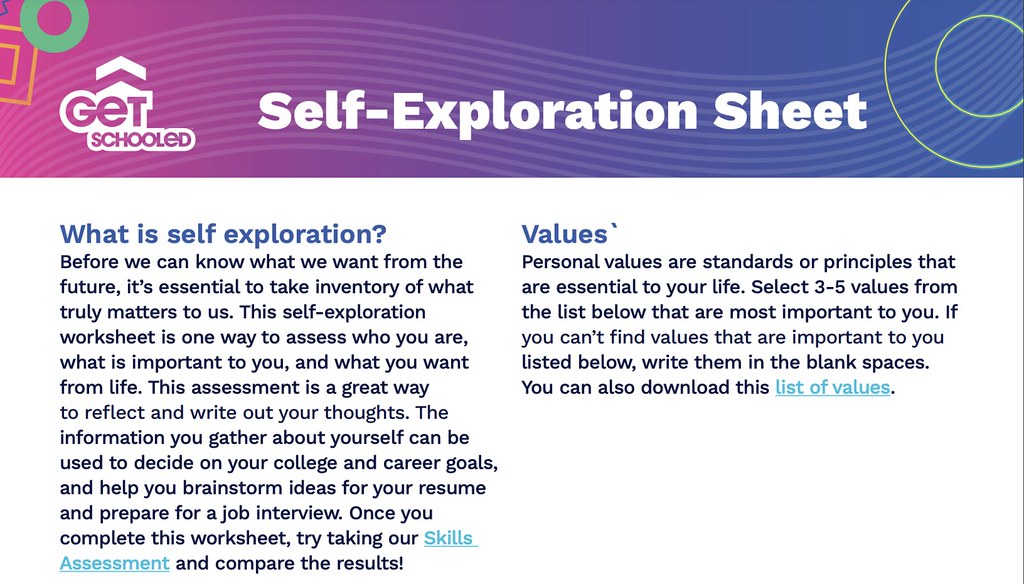
Ready to go deeper on these? Our Self-Exploration Worksheet takes you through them in a structured format.
Turn your answers into something you can search
Reflection that stays in your notes app doesn’t move you forward. The goal is to convert what you learned into terms you can look up.
Read back over your four answers and pull out the patterns, not job titles, but conditions. Something like: good at explaining things, care about health, need predictable hours, can’t do eight years of school.
Now search deeper:
- The U.S. Bureau of Labor Statistics’ Occupational Outlook Handbook lists hundreds of careers with what they involve, what they pay, what training they require, and whether the field is growing.
- O*NET OnLine lets you search by interests and skills rather than by job title.
That example above might surface respiratory therapist, health educator, medical assistant, or dental hygienist. Solid careers that plenty of students have never had described to them. You’ll find options you didn’t know existed, which is exactly why the order matters.
When you have a few worth investigating, our Know the Landscape series covers how those fields and their hiring processes actually work.
Test what you find in the real world
Reflection tells you what you think you want. Only experience tells you whether you’re right and want to continue.
Once you’ve got two or three fields worth exploring, get close to them:
- Talk to someone who does the job. Ask what a normal day looks like, what surprised them, and what they’d do differently. Our The Way: Career Stories to Find Your Way series is a good place to start listening.
- Try a small version of it. A volunteer shift, a free online course, a one-day job shadow, or a part-time job in that kind of environment.
- Pay attention to your reaction, especially the negative ones. “I hated how quiet it was” is genuinely useful information about you.
Then bring what you learned back to your four answers and revise them. Reflect, research, try, revise. That loop is career exploration. It isn’t a one-time decision you make and then live with.
Expect your answers to change
The person you are right now is not the person you’ll be in five years. Your skills will grow, your priorities will shift, and jobs that don’t exist yet will exist by the time you’re looking.
So come back to these four questions, after a first job, after a class that surprised you, after something goes badly. The questions stay the same. Your answers won’t, and that’s a sign the process is working.
Start with one question today
Pick one of the four questions and write your answer down. Not a plan, not a major, not a five-year timeline. One honest answer.
That’s how this starts.
Want a second opinion on what you’re seeing in your own answers? Connect with a Get Schooled Advisor. It’s free, it’s judgment-free, and “I don’t know where to start” is a completely fine place to begin.
Keep going
Build Your Career Skills
Learn more below about eight durable skills that enable youth to unlock their potential and achieve long-term success!

8 Ways to Explore Career Options
Check out our video series, The Way, that highlights stories from people in a variety of careers and industries.

In Demand Jobs and Industries
It’s important to know what jobs and industries are currently in high demand. This can help you understand what jobs employers are most eager to fill.

Como Creer Tu Plan de Busqueda de Empleo
Si quieres encontrar un trabajo o una pasantía, hay algunos pasos que puedes seguir para organizarte y comenzar tu búsqueda con confianza.